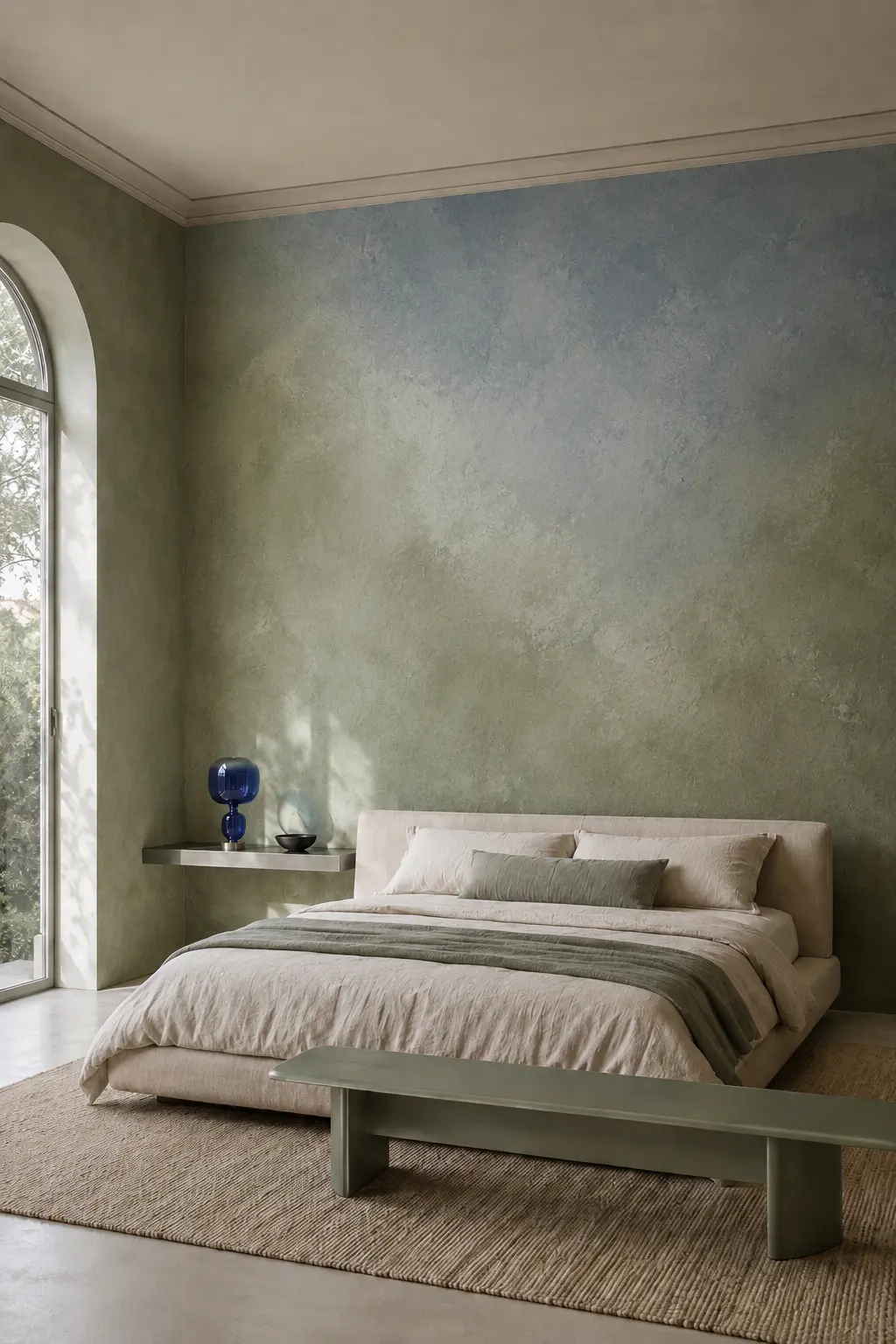
18 Sage Green Bedroom Ideas That Feel Fresh and Unexpected
Sage green bedrooms are often styled with simple painted walls, neutral bedding and a few plants. While this approach can feel calming, it may not create a distinctive focal point or make full use of the room’s architectural potential
The strongest sage green bedroom ideas use the colour as part of the architecture rather than treating it as a basic wall shade. Curved alcoves, sculptural ceilings, unusual storage, layered lighting and unexpected colour combinations can make sage green feel modern, artistic and memorable.
These ideas explore sage green bedroom walls, decor, furniture and colour palettes in completely different ways. Each concept is designed to produce its own visual identity rather than repeating the same bed, paint and bedding arrangement.
1. Cast Botanical Shadows Across the Sage Wall
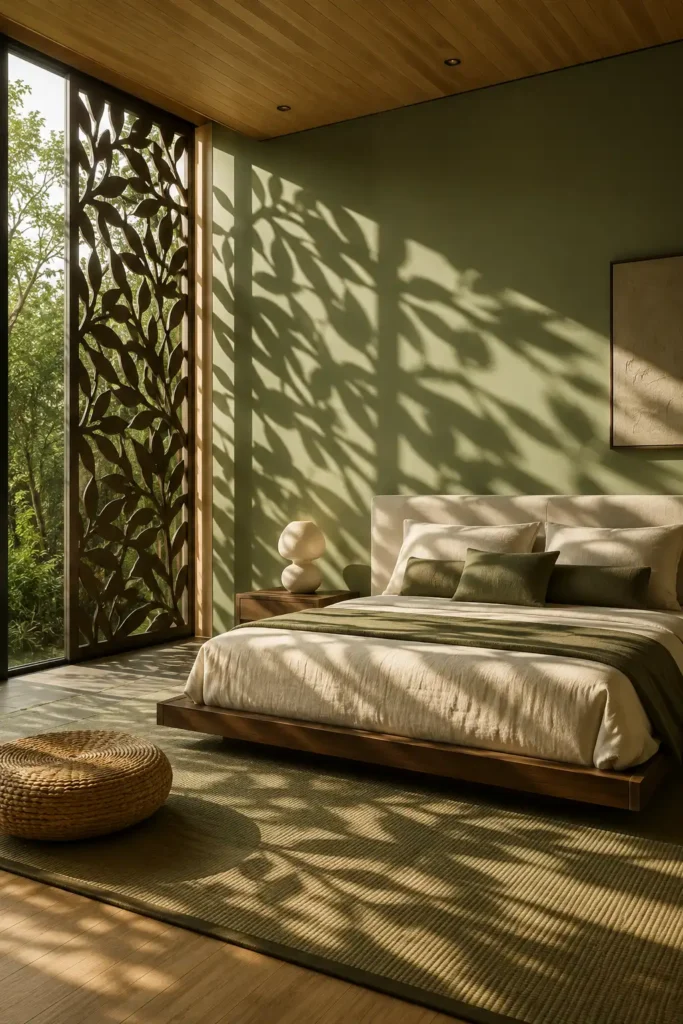
Install a decorative screen near a window so sunlight projects shifting leaf-shaped shadows onto the bedroom walls. The room changes throughout the day without needing busy wallpaper or heavy decor.
Color Palette:
Muted sage, dark bronze, walnut and warm cream
Key Pieces:
Perforated screen, sage wall, low platform bed, stone lamp and restrained natural materials
How to Get the Look:
Place a laser-cut panel where direct light can pass through it. Use an abstract botanical pattern with large openings so the shadows remain bold and readable instead of looking delicate or busy.
2. Carve a Backlit Sage Leaf Headboard
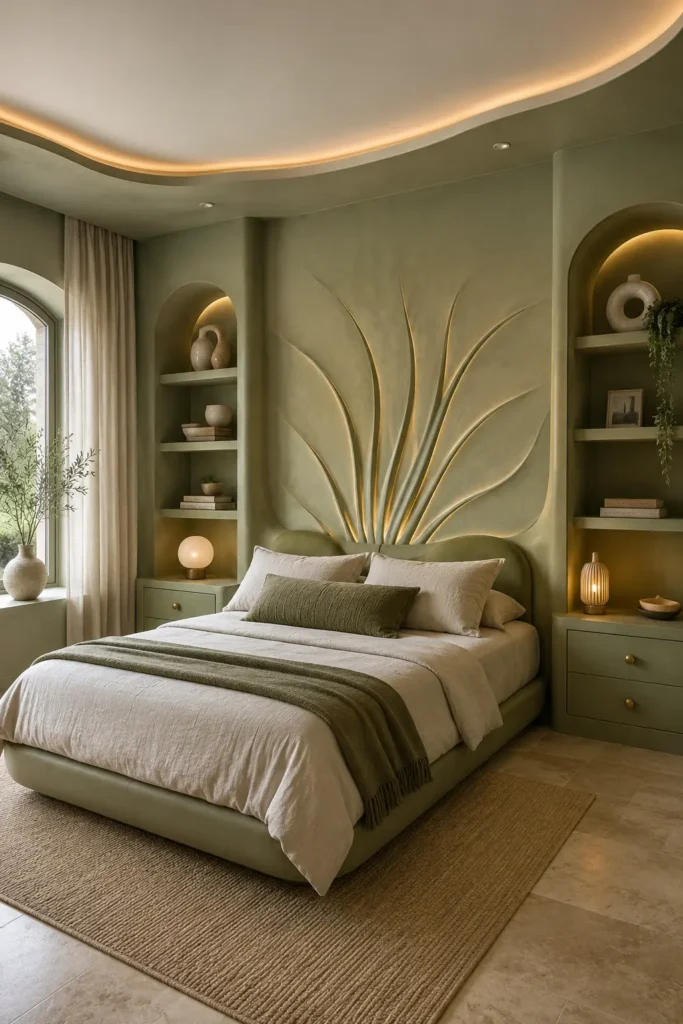
Turn the wall behind the bed into a sculptural botanical relief rather than adding ordinary framed artwork. Raised leaf-like forms with concealed lighting make the sage wall feel dimensional, artistic and immediately memorable.
Color Palette:
Muted sage, warm ivory, aged brass and pale limestone
Key Pieces:
Sculptural leaf relief, concealed channel lighting, curved bedside cabinets, arched niches and textured plaster
How to Get the Look:
Create the leaf forms with lightweight moulded panels or carved plaster over a framed base. Hide warm LED strips inside the recessed lines and keep the bedding simple so the illuminated wall remains the main feature.
3. Curve the Bed Into a Sage Plaster Niche
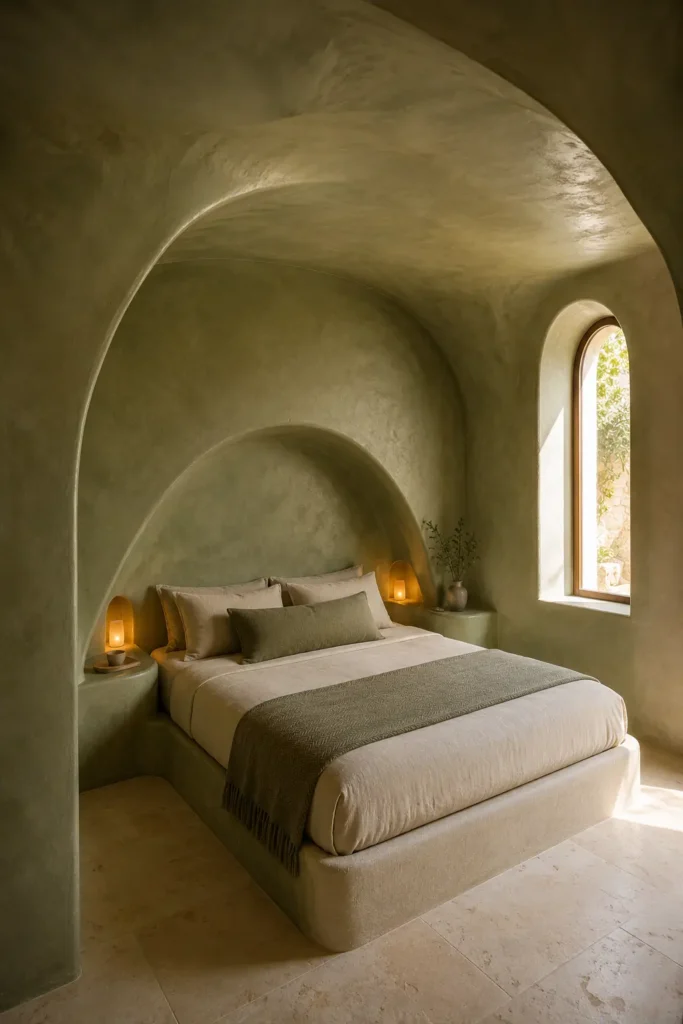
Create a softly rounded sleeping alcove that makes the bed feel carved into the architecture. The sage plaster wraps around the headboard and ceiling, forming a cocoon without closing off the room.
Color Palette:
Dusty sage, warm ivory, pale limestone and soft amber
Key Pieces:
Curved plaster niche, low bed, carved bedside ledges, concealed lighting and natural stone flooring
How to Get the Look:
Use lightweight framing to build a shallow curved shell around the bed. Finish it in limewash or textured plaster instead of flat paint, and integrate the bedside shelves into the structure so the niche feels architectural.
4. Blend Sage Into Dusty Blue Plaster
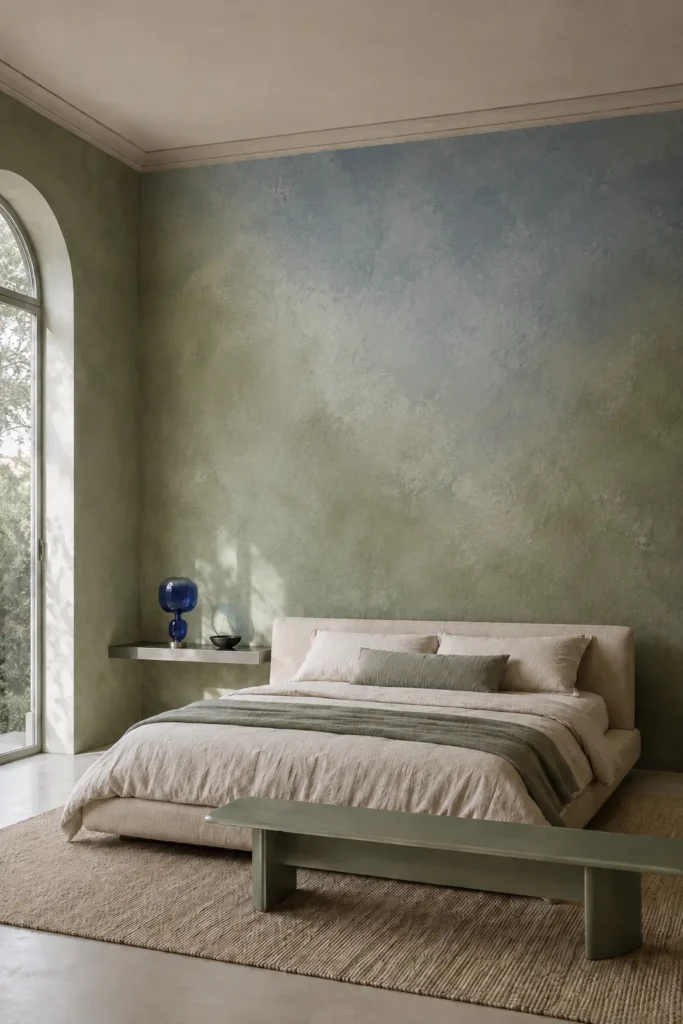
Instead of dividing two colours with a straight line, blend sage green gradually into dusty blue across a textured wall. The soft transition creates depth and makes the wall feel atmospheric rather than simply painted.
Color Palette:
Pale sage green, dusty blue, oatmeal and cobalt glass
Key Pieces:
Gradient plaster wall, low neutral bed, sculptural lamp, slim metal shelf and abstract textile art
How to Get the Look:
Blend the two colours while the plaster or paint is still wet. Keep the bedding simple so the wall remains the hero, and repeat the blue only once through a small decorative piece.
5. Frame the Bed With a Fluted Sage Arch
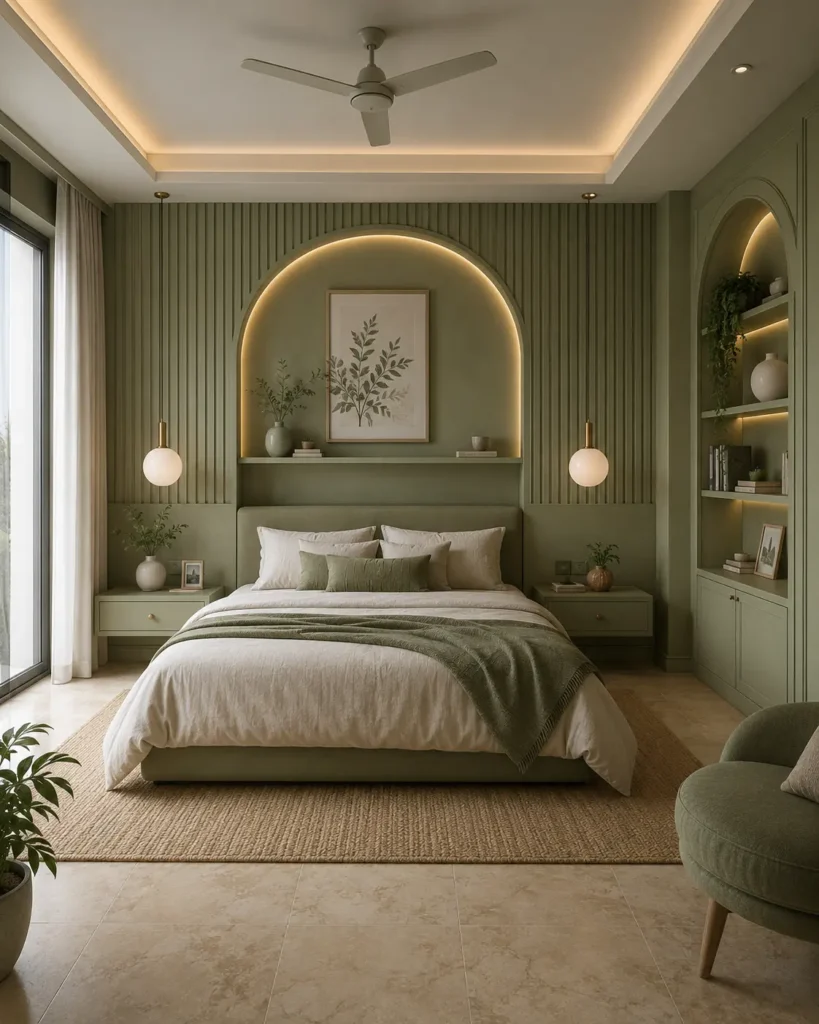
Use vertical fluting and one oversized rounded recess to make the bed feel built into the architecture. The ribbed texture adds height, while the glowing arch creates a calm focal point without relying on a conventional headboard wall.
Color Palette:
Olive sage, warm white, soft brass and natural jute
Key Pieces:
Vertical fluted panels, oversized arch, halo lighting, floating drawers and opal pendants
How to Get the Look:
Use slim timber battens or fluted wall panels around a smooth central recess. Keep the arch wider than the bed and install light behind its inner edge to separate it visually from the ribbed background.
6. Build a Living Moss Art Headboard
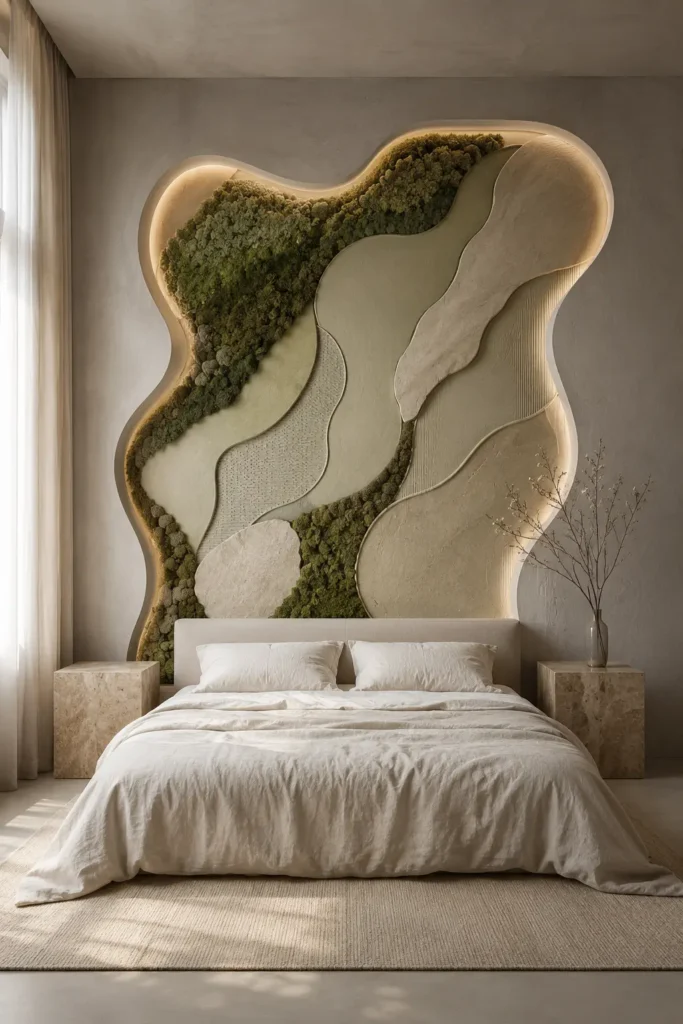
Combine preserved moss, sage plaster and subtle lighting in a framed botanical installation behind the bed. The natural texture creates a strong focal point without requiring a full plant wall.
Color Palette:
Moss green, pale sage, travertine and off-white
Key Pieces:
Preserved moss, recessed frame, textured plaster, halo lighting and minimal stone furniture
How to Get the Look:
Use preserved moss rather than live plants to avoid maintenance. Combine it with solid plaster sections so the headboard feels like an art piece instead of a conventional vertical garden.
7. Wrap the Window in a Sage Reading Pod
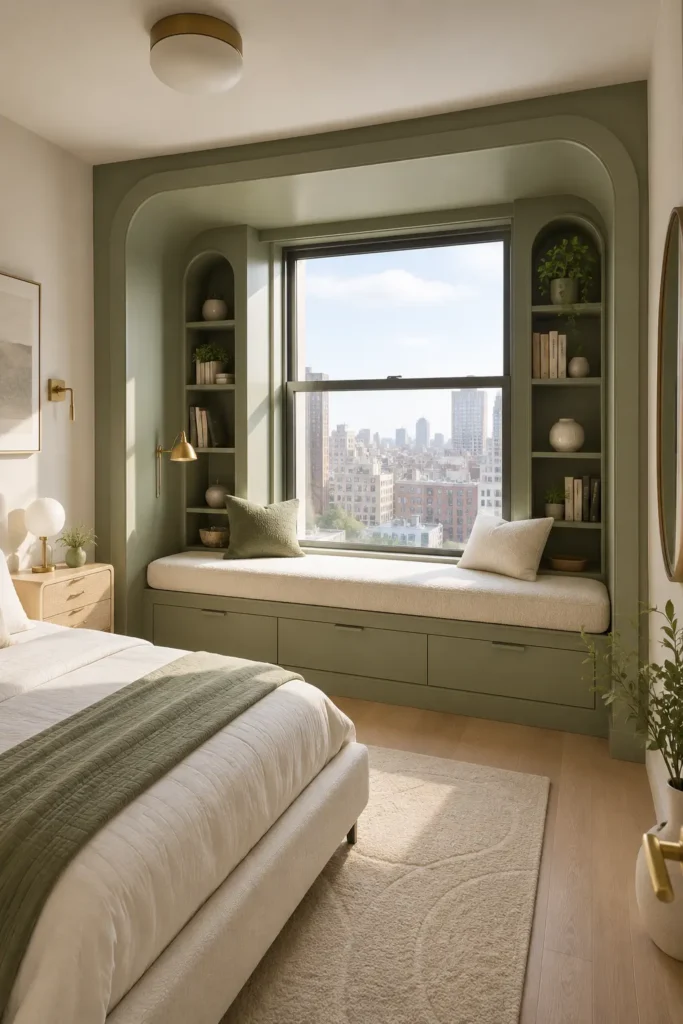
Turn the bedroom window into a multifunctional pod with seating, shelving and hidden drawers. The curved sage structure becomes both a reading nook and a strong architectural feature.
Color Palette:
Fresh sage, cream boucle, pale oak and brushed brass
Key Pieces:
Window bench, curved shelving, deep drawers, integrated light and compact upholstery
How to Get the Look:
Keep the side shelves shallow so they do not reduce the window opening. Use the drawers for bedding or clothes, and carry the sage colour across the entire built-in so it reads as one object.
8. Float a Sage Light Moat Around the Ceiling
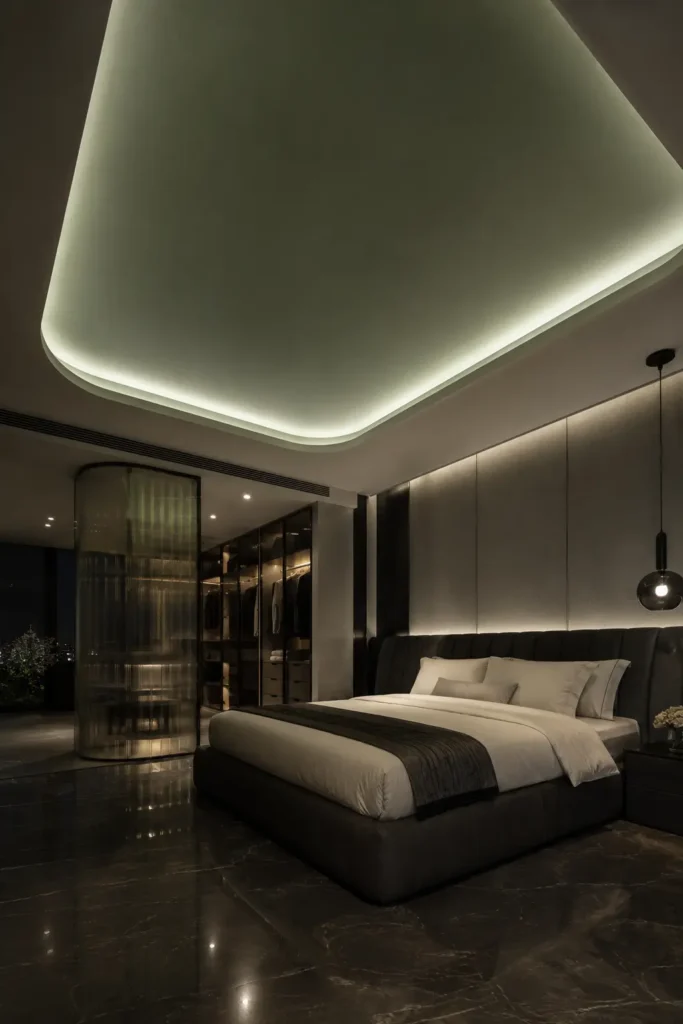
Create a recessed ceiling edge washed with pale green light. The glow gives the bedroom an almost weightless atmosphere and turns sage into an evening lighting effect instead of just a paint colour.
Color Palette:
Pale luminous sage, charcoal, ivory and smoked glass
Key Pieces:
Recessed ceiling edge, concealed lighting, dark bed, reflective floor and minimal glass details
How to Get the Look:
Hide the light source completely behind the recessed edge. Use a very soft sage temperature rather than bright green, and keep the furniture darker so the ceiling glow remains visible.
9. Make the Bed Appear to Float
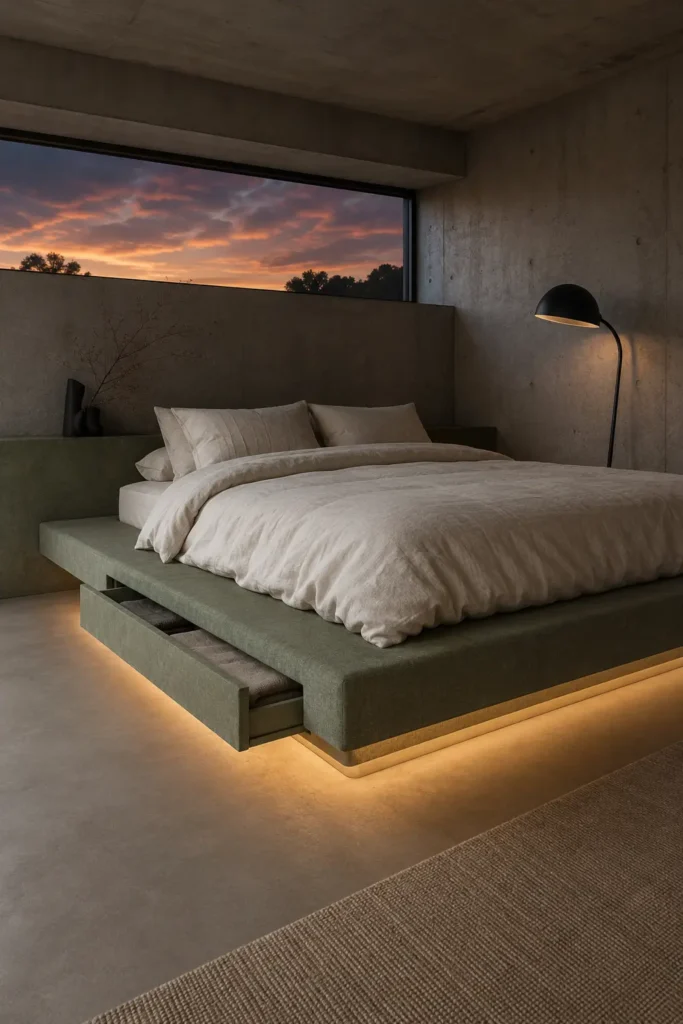
Use a thin sage-covered platform with concealed lighting underneath so the bed appears suspended above the floor. Hidden drawers can turn the platform into practical storage.
Color Palette:
Muted sage, raw concrete, ivory and matte black
Key Pieces:
Recessed platform base, hidden underlighting, concealed drawer, oversized bedding and sculptural lamp
How to Get the Look:
Set the support structure farther inward than the platform edge. Keep the lighting warm and low, and use the platform depth for hidden storage rather than adding separate bedroom cabinets.
10. Fold the Headboard Into an Origami Storage Wall
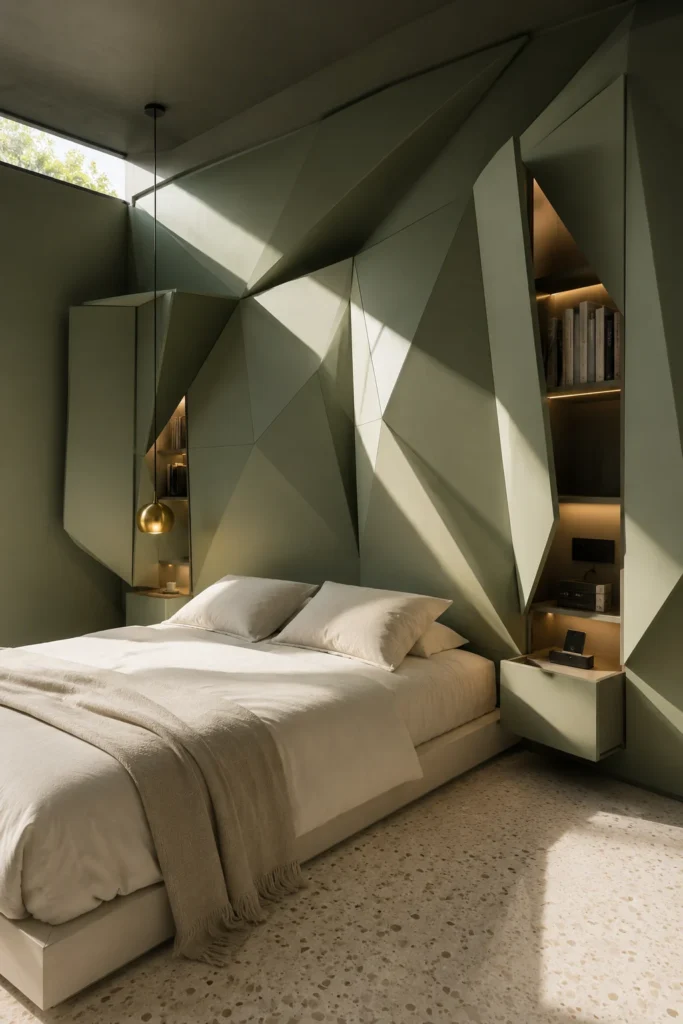
Turn the bed wall into a faceted architectural surface inspired by folded paper. Selected sage panels open to reveal hidden shelves, charging points, and bedside storage.
Color Palette:
Mineral sage, warm cream, pale terrazzo and blackened brass
Key Pieces:
Faceted wall panels, concealed storage, integrated lighting, low bed and directional pendant
How to Get the Look:
Build shallow triangular panels over a framed storage wall. Use only a few opening sections so the design remains sculptural rather than becoming a busy cabinet system.
11. Frame a Dressing Area With a Sage Portal
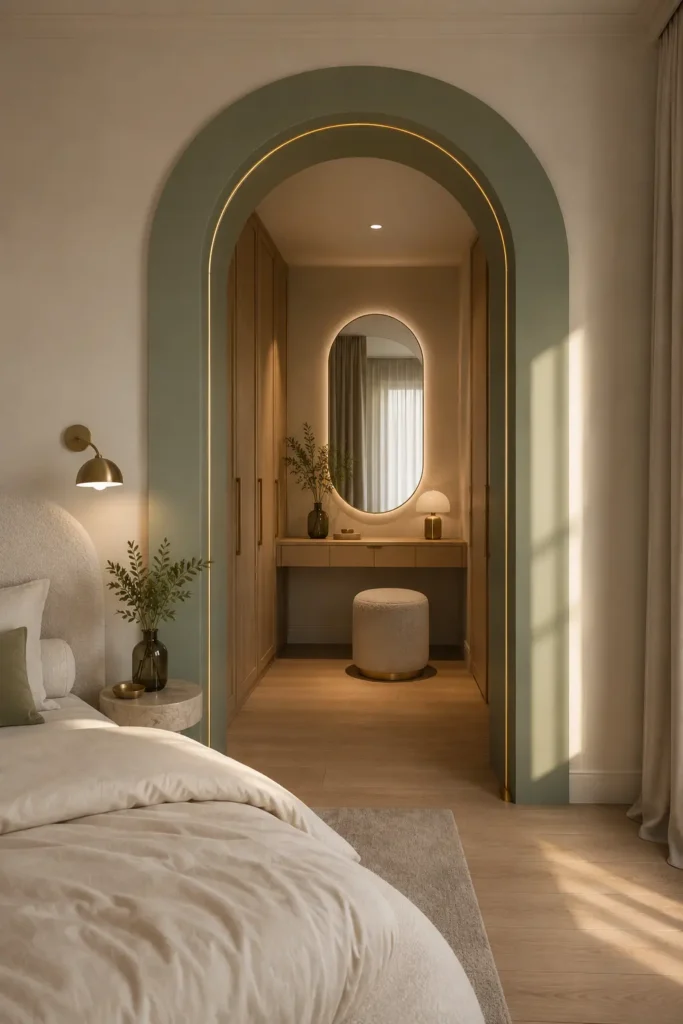
Create an oversized arch that leads into a compact dressing zone. The portal visually separates the bedroom while keeping both spaces connected and making the dressing area feel more special.
Color Palette:
Deep sage, warm oak, cream and brushed brass
Key Pieces:
Rounded portal, compact vanity, illuminated mirror, shallow wardrobes and integrated lighting
How to Get the Look:
Use the arch to frame the dressing area rather than building a full wall. Keep the storage shallow and use mirrors to visually extend the niche.
12. Add a Sculptural Climbing Wall for a Boys’ Room
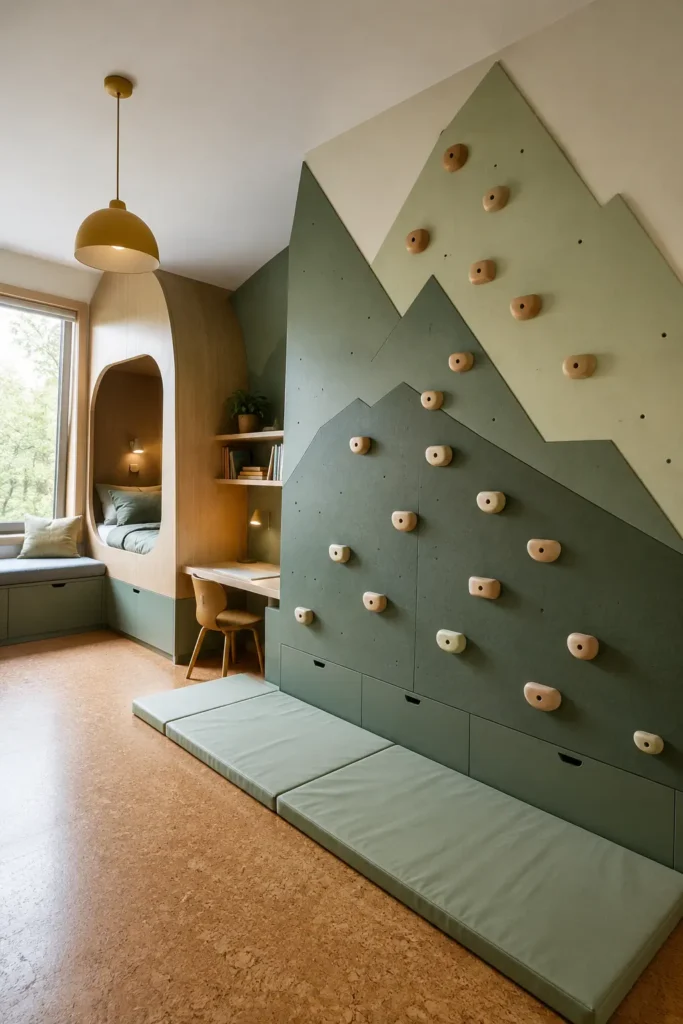
Design a sage bedroom for boys with a climbing wall that looks like art. Oversized timber holds, hidden toy storage and an integrated desk can make the room active without becoming visually noisy.
Color Palette:
Layered sage, warm oak, mustard and natural cork
Key Pieces:
Sculptural climbing wall, timber holds, integrated desk, storage drawers and compact bed
How to Get the Look:
Choose large simple shapes instead of colourful climbing holds. Build storage into the base and keep the rest of the room restrained so the wall remains the focal point.
13. Sweep Sage Slats Across the Ceiling
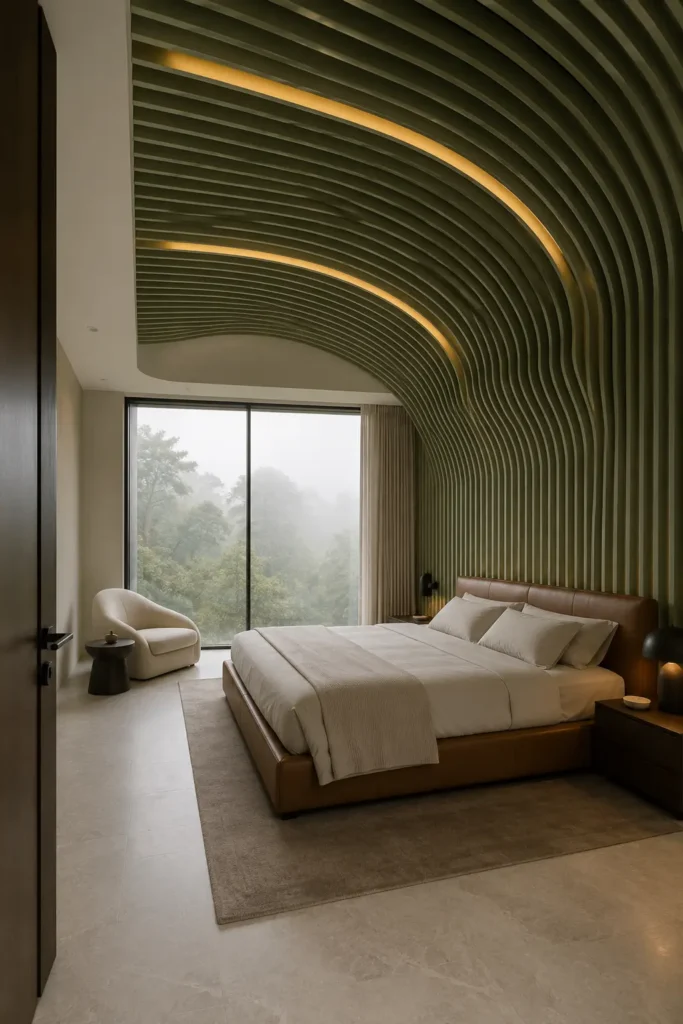
Run curved timber slats from behind the bed and across the ceiling in one continuous wave. Painting or staining the slats sage makes the colour feel dimensional and architectural.
Color Palette:
Deep sage, caramel leather, pale stone and warm gold
Key Pieces:
Curved timber slats, concealed lighting, low bed, minimal furniture and natural view
How to Get the Look:
Vary the depth and spacing of the slats as they move across the ceiling. Use lighting only in selected sections so the wave appears sculptural rather than uniformly striped.
14. Pair Sage With a Cobalt Floor River
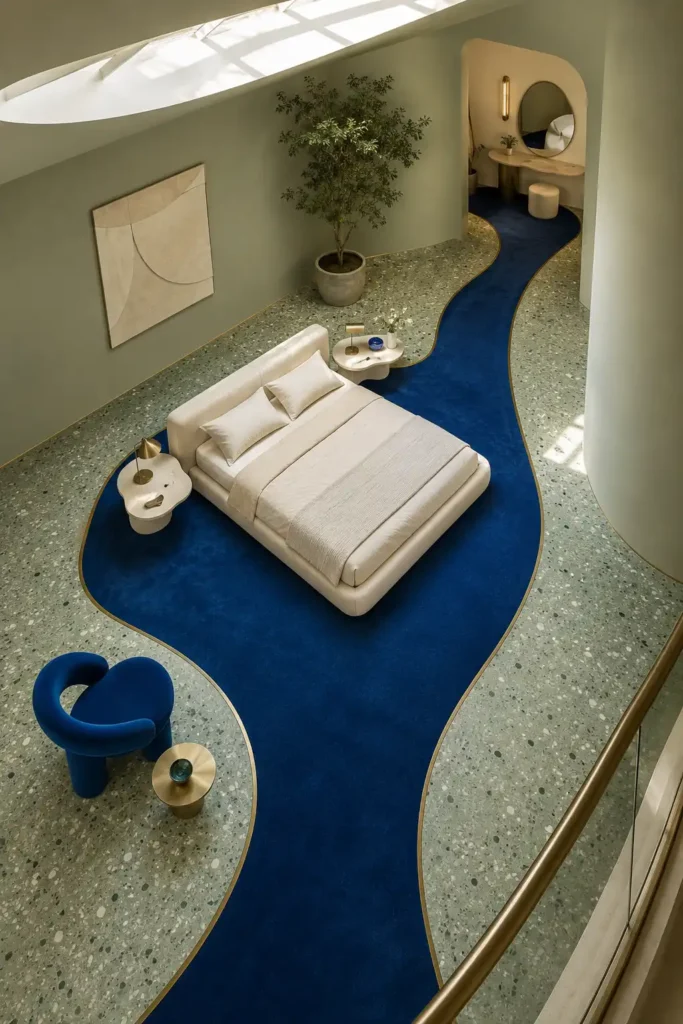
Introduce cobalt through a curved floor inset that flows through the sage bedroom. The unexpected colour contrast makes the room feel artistic and prevents sage from becoming overly soft or predictable.
Color Palette:
Pale sage, deep cobalt, ivory and brass
Key Pieces:
Curved floor inset, brass inlay, low bed, sculptural chair and minimal furniture
How to Get the Look:
Use cobalt as one controlled visual gesture instead of repeating it everywhere. Keep the bed and furniture light so the floor pattern remains readable from the room entrance.
15. Hide the Bedroom Behind Sage Pivot Panels
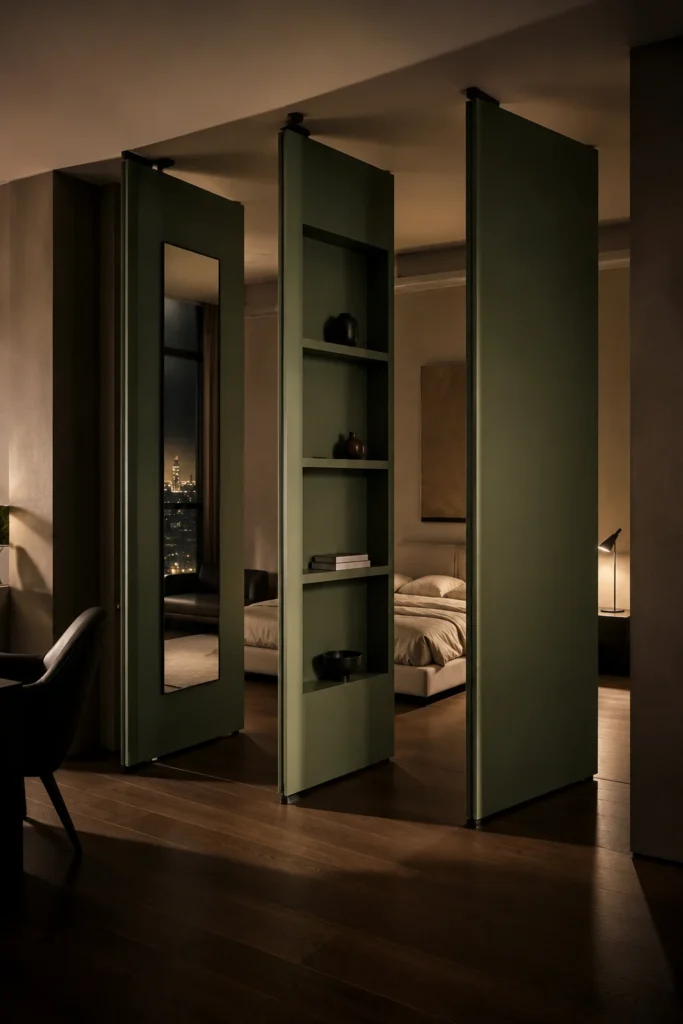
Use floor-to-ceiling sage panels that rotate to reveal or conceal the sleeping area. When closed, the panels create a seamless wall; when opened, they become sculptural dividers.
Color Palette:
Smoky sage, dark walnut, warm cream and blackened bronze
Key Pieces:
Pivot panels, integrated mirror, shallow shelves, concealed hardware and low bed
How to Get the Look:
Use only two or three large panels so the feature remains clean. Give each panel a separate function and leave enough clearance for them to rotate without blocking circulation.
16. Build a Full-Wall Sage Halo Suite
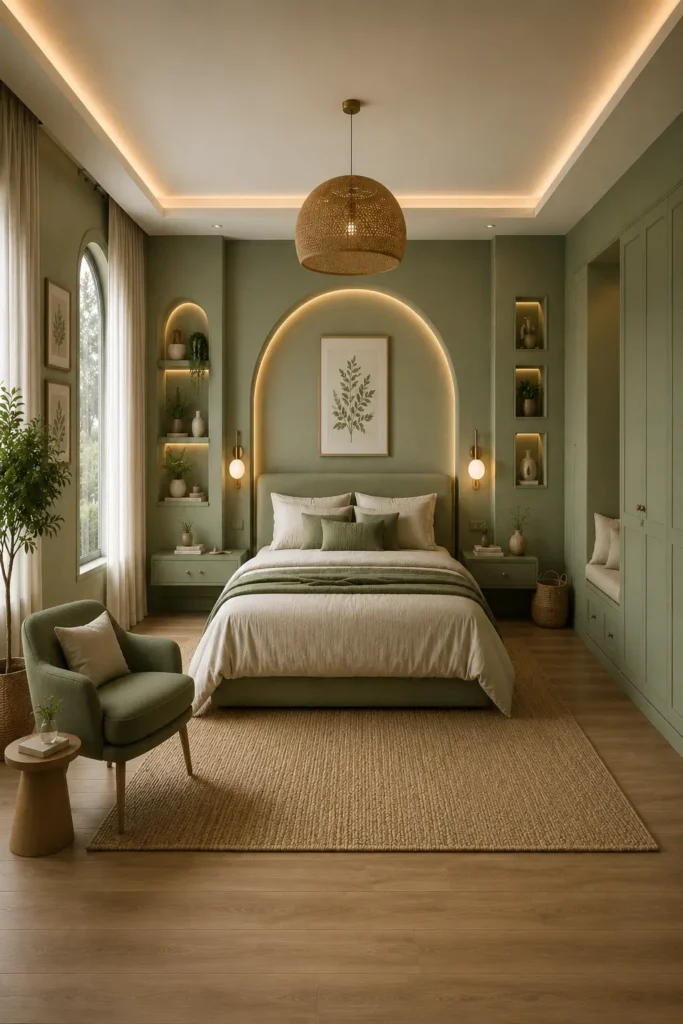
Create one continuous sage-green wall that combines the bed, storage, display niches and a window seat. A large glowing halo above the bed keeps the cabinetry from feeling heavy and gives the whole bedroom a custom-suite appearance.
Color Palette:
Soft sage, warm oak, creamy white and honey rattan
Key Pieces:
Glowing halo recess, integrated nightstands, full-height wardrobes, display niches and window seat
How to Get the Look:
Design the bed wall and wardrobes as one uninterrupted system. Repeat the same sage finish across every section, then use the halo lighting, warm timber floor and woven pendant to prevent the cabinetry from feeling flat.
17. Drape a Pleated Sage Textile Waterfall
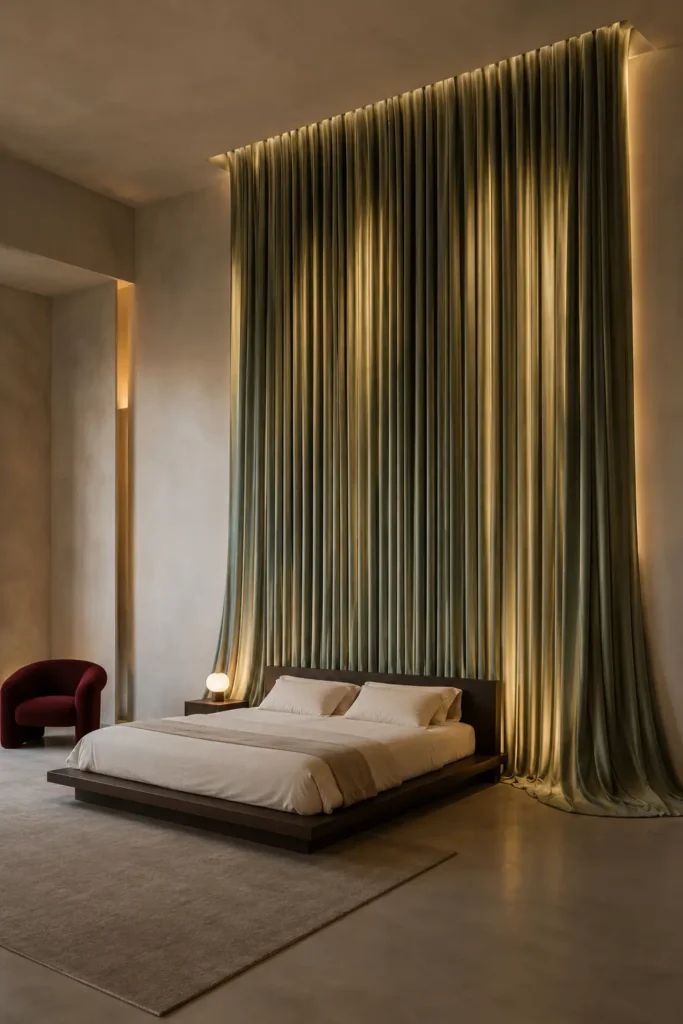
Create a dramatic soft wall by running deeply pleated fabric from the ceiling behind the bed and allowing it to pool slightly at floor level. The folds add movement without using hard architectural forms.
Color Palette:
Smoky sage, pale olive, dark walnut and burgundy
Key Pieces:
Ceiling-recessed fabric, deep pleats, concealed lighting, low bed and contrasting chair
How to Get the Look:
Use fire-rated upholstery fabric with enough weight to hold strong folds. Mount it in a concealed ceiling track and light selected sections from behind rather than illuminating the entire wall evenly.
18. Thread a Sage String Canopy Around One Side of the Bed
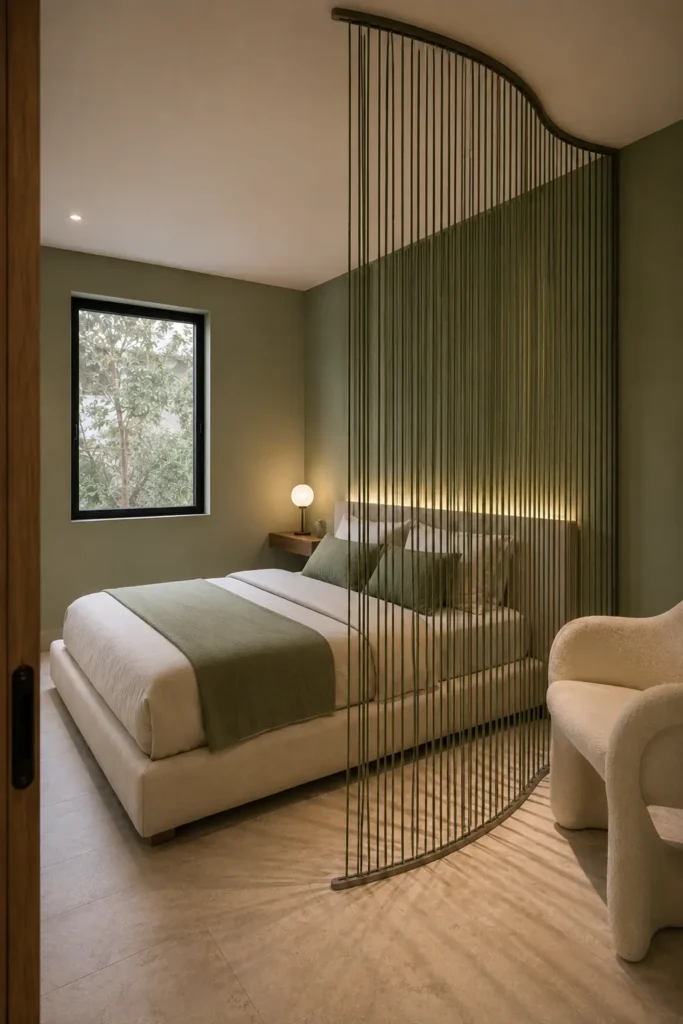
Define the sleeping area with fine sage and olive cords stretched around the headboard and one side of the bed. The installation adds movement and shadow while remaining visually transparent in a small room.
Color Palette:
Layered sage, olive, ivory, walnut and warm gold
Key Pieces:
Tensioned cords, curved mounting tracks, focused lighting, low bed and minimal furniture
How to Get the Look:
Use two or three closely related sage shades to create depth. Keep the entrance side open and space the cords farther apart near the foot of the bed so the installation feels airy rather than enclosed.
Final Thoughts
A sage green bedroom does not need to rely on painted walls and matching bedding. The colour becomes far more memorable when it is built into a curved niche, sculptural ceiling, floating platform, dressing portal or moving architectural feature.
Choose one dominant idea and allow it to control the composition. Supporting furniture and decor should remain quieter so the sage feature stays clear, practical and visually powerful.

Zain Abid
Founder & Managing Editor
Helping readers create warm, functional, and beautiful homes through practical decorating ideas and thoughtfully researched interior inspiration.
Read Full Profile →